
Choosing the right tool steel is crucial for manufacturing success. It impacts tool performance, lifespan, and product quality.
Tool steel is known for its hardness and wear resistance. These properties make it ideal for cutting and shaping materials.
Understanding tool steel grades and properties is essential. Each grade offers unique benefits for specific applications.
This guide will help you navigate the tool steel selection process. We’ll explore key factors like hardness, toughness, and cost.
Understanding Tool Steel
Tool steel is a specialized type of carbon and alloy steel. It’s formulated to withstand the rigors of cutting, molding, and shaping other materials.
These steels are renowned for their exceptional hardness and strength. They are indispensable for precision tools and dies.
Several features distinguish tool steel from standard steel. These include high wear resistance and the ability to endure extreme temperatures.
Key Characteristics of Tool Steel:
- Hardness: Retains sharpness in cutting applications.
- Toughness: Resists cracking under pressure.
- Wear Resistance: Withstands friction and abrasion.
- Temperature Tolerance: Performs well even at high temperatures.
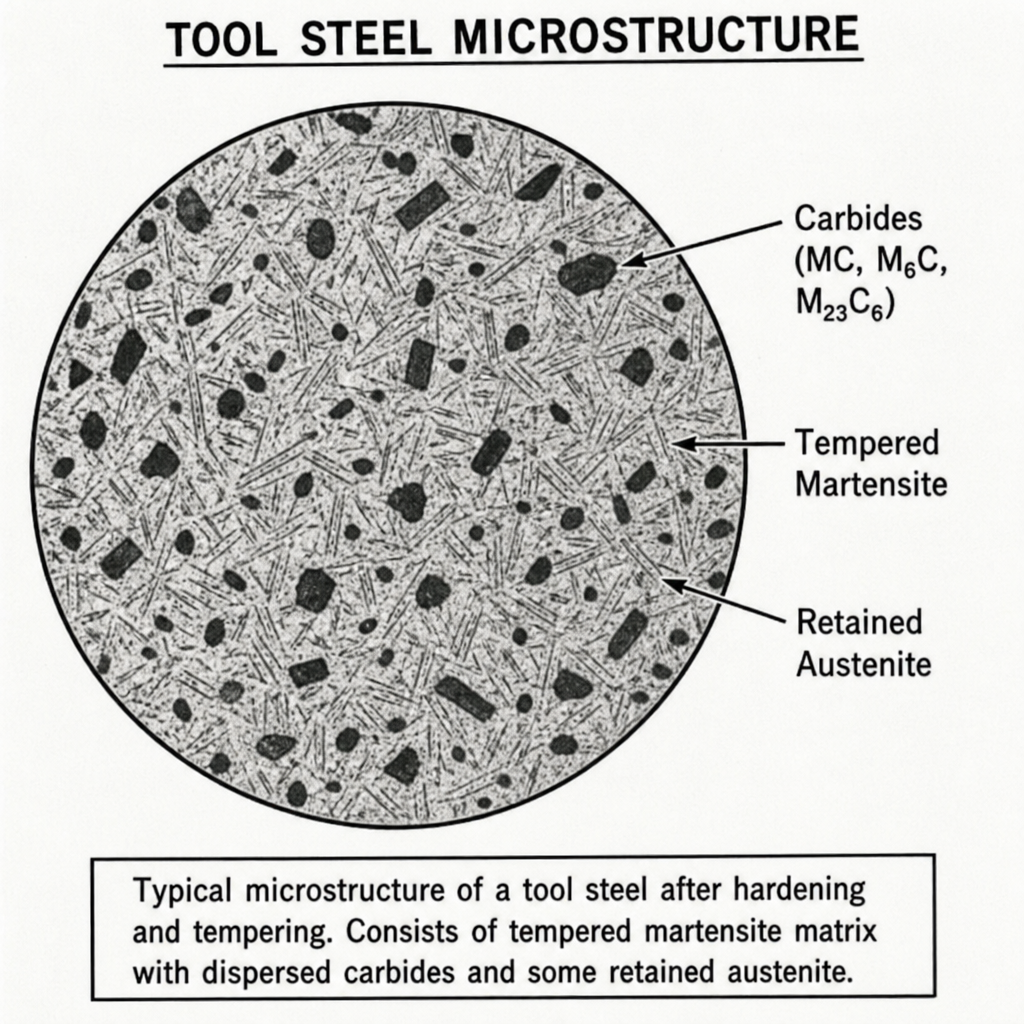
There are various tool steel categories, each with specific properties. Water-hardening, cold-work, and hot-work tool steels all serve different purposes.
Selecting the right type requires understanding the working environment. This includes the temperatures, stresses, and materials involved in your application.
In essence, tool steel is a vital material in manufacturing. Its unique properties enable the creation of high-quality, long-lasting tools.
Tool Steel Grades and Classifications
Tool steel grades are categorized based on their chemical composition and the applications they serve. Each grade offers a distinct balance of hardness, toughness, and resistance to heat and wear.
The most common grades include water-hardening (W-grade), cold-work (O, A, D grades), and shock-resisting (S-grade) steels. Each is tailored for specific purposes, ensuring optimal performance in various scenarios.
Water-hardening tool steels are the most basic and economical. They’re usually applied where high wear resistance isn’t critical. Cold-work steels excel in cutting and forming at room temperature, offering impressive toughness and wear resistance.
Common Tool Steel Grades:
- W-grade: Basic, water-quenched.
- O-grade: Oil-hardened.
- A-grade: Air-hardened, versatile.
- D-grade: High carbon-chromium, extreme wear resistance.
- S-grade: Designed to withstand impact and shock.
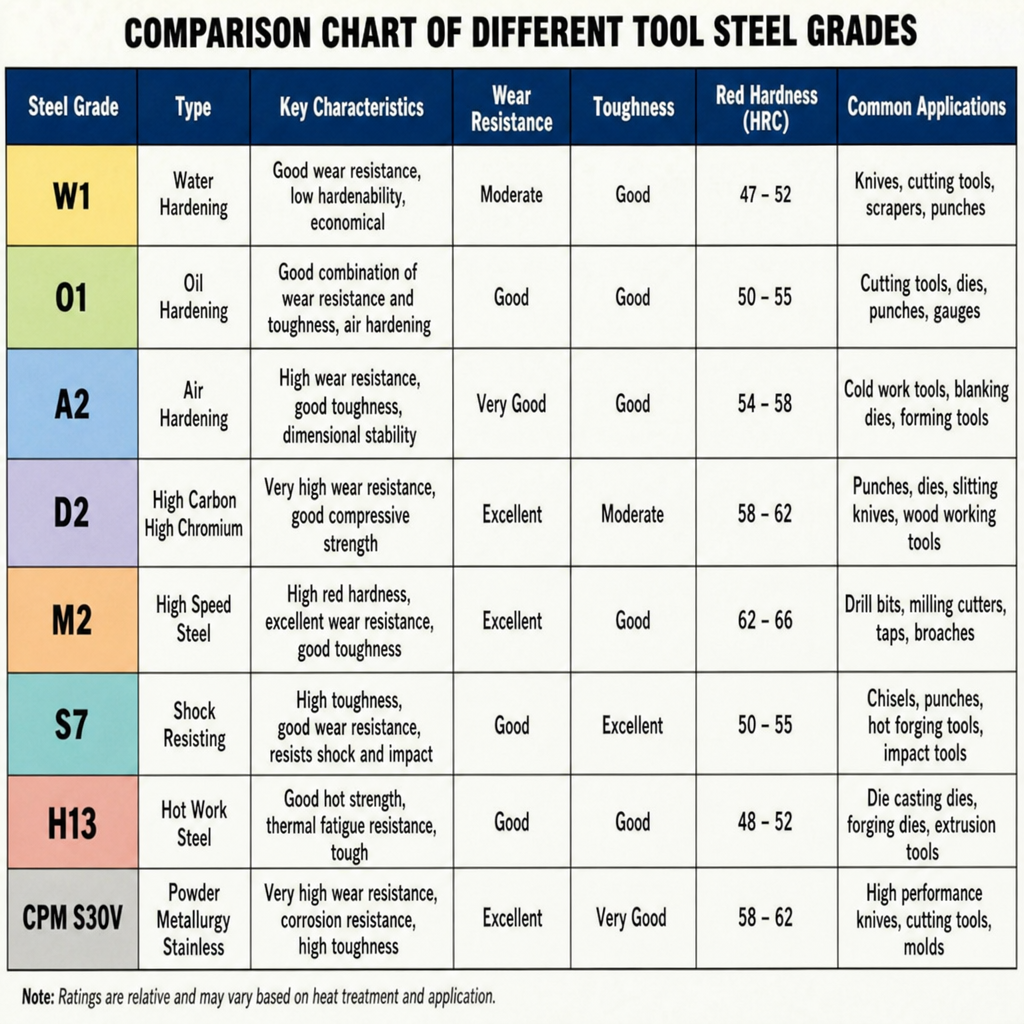
For high-speed applications, the high-speed steel grades (M, T) are ideal. These withstand the heat and stresses of fast machining tasks. Hot-work tool steels, on the other hand, are built for high-temperature applications, like die casting.
Understanding these classifications helps engineers and manufacturers choose the right tool steel. Each category is designed to meet specific needs, ensuring efficiency and durability in industrial processes.
Key Tool Steel Properties to Consider
Selecting the right tool steel involves understanding its critical properties. Each property affects the tool’s performance, durability, and application suitability.
Hardness is paramount in tool steel evaluation. A tool’s ability to cut and resist deformation depends directly on its hardness. This is usually measured on the Rockwell scale and influences wear resistance.
Toughness is another crucial aspect. It defines the steel’s ability to absorb energy and resist fractures, especially under stress. This is vital for tools that endure significant impact or shock during use.
Essential Tool Steel Properties:
- Hardness: Critical for cutting and wear.
- Toughness: Important for impact resistance.
- Wear Resistance: Crucial for tools facing friction.
- Heat Resistance: Critical for high-temperature applications.
Wear resistance ensures that the tool maintains its form over prolonged use. This property is particularly significant for abrasive conditions. Without sufficient wear resistance, tools would degrade rapidly.
Heat resistance must be considered for tools used in high-temperature environments. This property prevents tools from losing their hardness and shape when exposed to heat. Each of these properties should be evaluated based on the tool’s intended application.
The correct balance of these properties allows for optimized performance. Understanding and matching them to specific requirements ensures that tools perform efficiently and last longer in their intended roles.
Factors Influencing Tool Steel Selection
Choosing the right tool steel requires a comprehensive understanding of several influencing factors. Each factor plays a critical role in determining the tool’s performance and longevity.
The working environment is a primary consideration. Tools used in harsh conditions, such as exposure to extreme temperatures or corrosive environments, demand specialized tool steel properties.
Economic factors also weigh heavily in the selection process. Balancing performance needs with budget constraints is crucial. Cost-effective choices can often yield high performance if selected carefully.
Key Factors to Consider:
- Working Environment: Temperature, pressure, and corrosive exposure.
- Economic Considerations: Cost versus performance balance.
- Material being Worked: Determines tool steel suitability.
- Tool Design Complexity: Impacts steel selection.
Another consideration is the material being worked on. The nature of the material, such as its hardness and abrasiveness, affects which tool steel will perform best. Tools designed for soft materials may differ significantly from those used for hard, abrasive materials.
Moreover, the complexity of the tool design can influence steel selection. Complex tools may require steels with specific properties to withstand intricate machining processes. Understanding these influencing factors is vital for making informed tool steel choices that enhance efficiency and reduce operational costs.
Common Applications and Industry Use Cases
Tool steel is indispensable across various industries due to its versatility and durability. Its unique properties make it ideal for manufacturing high-performance tools and components.
In the automotive industry, tool steel is used for making dies and molds essential for producing car parts. This application demands materials that can withstand high pressures and repetitive use, which tool steel provides.
The aerospace sector also relies heavily on tool steel. Parts for aircraft and spacecraft need materials that are tough and resistant to extreme conditions. Tool steel’s ability to maintain structural integrity at high temperatures makes it suitable for these demanding applications.
Key Industry Applications:
- Automotive: Dies, molds, and components.
- Aerospace: Structural parts and engine components.
- Manufacturing: Cutting tools and machine parts.
Manufacturing industries utilize tool steel for creating cutting and forming tools that demand precision and wear resistance. These applications ensure that components are crafted to exact specifications, maintaining the quality and reliability of manufactured products. Tool steel’s adaptability makes it a staple in these varied and demanding sectors.
The Role of Alloying Elements in Tool Steel
Alloying elements play a crucial role in defining tool steel’s performance and suitability for different applications. Each element contributes unique characteristics that enhance the steel’s properties.
Chromium is a common additive that improves corrosion resistance and hardenability, making it essential for tools facing harsh environments. Its inclusion also contributes to the steel’s overall durability and longevity.
Other elements such as vanadium and molybdenum enhance specific properties of the tool steel. Vanadium boosts wear resistance and increases toughness, crucial for tools subjected to high mechanical stress. Molybdenum, on the other hand, augments high-temperature performance.
Key Alloying Elements:
- Chromium: Adds corrosion resistance and hardenability.
- Vanadium: Enhances wear resistance and toughness.
- Molybdenum: Improves strength at high temperatures.
- Tungsten: Increases hardness and heat tolerance.
Tungsten plays an essential part by increasing both hardness and thermal resistance. This makes it invaluable for applications involving high-speed machining. By understanding the effects of these elements, manufacturers can customize tool steel to suit specific needs and applications, balancing performance with cost.
Heat Treatment and Its Impact on Tool Steel Performance
Heat treatment is a pivotal process in enhancing tool steel’s properties, significantly affecting its performance and durability. It alters the microstructure of steel to improve hardness, toughness, and wear resistance.
Key methods include annealing, quenching, and tempering. Annealing softens steel, easing machinability, while quenching rapidly cools it to boost hardness. Tempering, done after quenching, reduces brittleness and enhances toughness, creating a balanced tool that’s hard yet resilient.
Common Heat Treatment Processes:
- Annealing: Softens steel, improving machinability.
- Quenching: Increases hardness through rapid cooling.
- Tempering: Reduces brittleness while enhancing toughness.
These processes ensure the tool steel can withstand demanding operational conditions. Choosing the right heat treatment is essential for optimizing tool performance. It tailors the steel’s characteristics to match specific application needs, directly impacting the quality of the end product.
Balancing Cost, Performance, and Sustainability
When selecting tool steel, striking a balance between cost, performance, and sustainability is crucial. Manufacturers must consider budget constraints alongside the performance requirements for specific applications. A higher initial cost may be justified if the steel enhances tool lifespan and productivity.
Sustainability is increasingly important in tool steel selection. Opting for recycled materials can reduce costs and environmental impact. Sustainable tool steel choices not only benefit the environment but also improve a company’s public image and market appeal.
Key Considerations:
- Budget Constraints: Align cost with performance benefits.
- Sustainability: Choose recycled materials when possible.
- Performance Needs: Assess long-term tool productivity and lifespan.
Balancing these factors is key to maximizing the return on investment. Carefully considering each aspect ensures the selection of the best tool steel for long-term success.
Practical Tips for Selecting the Right Tool Steel
Choosing the right tool steel can be a complex process. Understanding your specific application needs is critical. Consider the material you’ll be working with and the operational environment.
Consult with experts to gain insights into the best tool steel choices for your project. Leverage their experience and expertise to make informed decisions.
Tips to Consider:
- Evaluate Material: Match tool steel to material type.
- Consult Experts: Seek advice from metallurgists or suppliers.
- Assess Conditions: Consider heat, impact, and wear factors.
By integrating these practical tips, you can ensure optimal tool performance and longevity while minimizing risks and costs.
Making Informed Tool Steel Choices
Selecting the right tool steel is vital for tool performance and longevity. By understanding grades, properties, and specific application needs, you can make informed decisions.
Consider factors like cost, sustainability, and expert advice to enhance your selection process. A well-informed choice ensures efficient operations and excellent results in your manufacturing projects.