
When producing small, high-precision tools, understanding O1 vs A2 tool steel is crucial. Manufacturers often face unexpected size changes after heat treatment, leading to costly rework or scrap. The challenge lies in selecting the right steel type that balances machinability, hardness, and dimensional stability. This guide will help toolmakers, engineers, and procurement teams understand how oil hardening vs air hardening steel affects part performance, and how to predict dimensional stability O1 vs A2 under real-world conditions.
Why Heat Treatment Distortion Matters
Precision tools—punches, dies, blades, and gauges—must maintain tight tolerances. Even minor changes during hardening can compromise assembly, cause part rejection, and increase production costs. Research from ASM International shows that oil-quenched steels like O1 can have up to 1.5–2× higher dimensional change than air-hardened steels such as A2, particularly for thin or complex geometries.
Additionally, inconsistent cooling rates during quenching introduce residual stresses, leading to unpredictable deformation. For high-value tooling, these distortions translate directly into cost and operational risk.
Key Differences Between O1 and A2 Tool Steel
| Property | O1 Tool Steel | A2 Tool Steel |
|---|---|---|
| Hardening | Oil | Air |
| Machinability (annealed) | Excellent | Good |
| Dimensional Stability | Moderate | High |
| Common Applications | General tooling, punches, dies | Precision tooling, dies requiring tight tolerance |
| Cost | Lower | Slightly higher |
O1 is more forgiving in machining but requires careful quenching. A2, while slightly more challenging to machine, provides superior dimensional stability, especially for critical precision parts.
Oil Hardening vs Air Hardening: Practical Impact
The choice of quenching medium defines the steel’s final dimensional behavior. O1 tool steel is oil hardened. Oil provides rapid cooling, which increases hardness but amplifies residual stresses. Complex shapes are prone to twisting, warping, and size deviation.
In contrast, A2 tool steel uses air hardening. Slower, more uniform cooling reduces residual stresses, making it more predictable in terms of dimensional stability O1 vs A2. This is particularly advantageous for small, thin, or intricate parts where even 0.05 mm deviation can cause assembly issues.
Buyer Insight: When selecting between O1 and A2, factor in part geometry and allowable tolerance. Thin or elongated features benefit from A2.
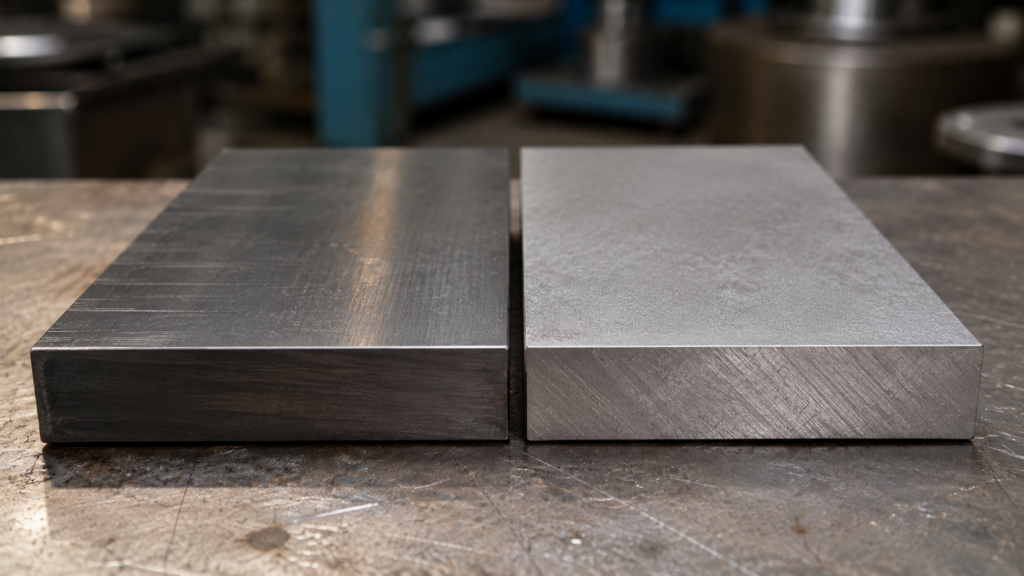
Dimensional Stability O1 vs A2
Dimensional stability after hardening depends on:
- Quenching method (oil vs air)
- Part thickness
- Cross-sectional geometry
- Residual stress relief
- Holding time at tempering temperature
Studies from Tooling & Production Magazine show that A2 can reduce post-heat-treatment distortion by 30–50% compared to O1 in thin tooling plates. For manufacturers, this translates into less grinding, rework, and scrap.
Pro Tip: For complex geometries, consider simulating heat treatment using FEA software to predict dimensional changes.
When O1 Tool Steel Is Still Useful
Despite its higher distortion risk, O1 tool steel remains relevant:
- Simple, blocky tools
- Budget-conscious projects
- Tools with sufficient grinding allowance
- Low- to mid-volume production
Proper fixture design, careful oil quenching, and strategic pre-stress relief can mitigate distortion risks, making O1 a cost-effective choice for less critical components.
When A2 Tool Steel Is the Safer Choice
A2 tool steel is preferred when:
- Precision is paramount
- Thin or elongated parts are used
- Tight tolerances are required
- Post-heat-treatment grinding is limited
- High scrap costs must be avoided
Industries like aerospace, medical device tooling, and high-precision stamping often favor A2 for its predictable behavior.
Cost Considerations
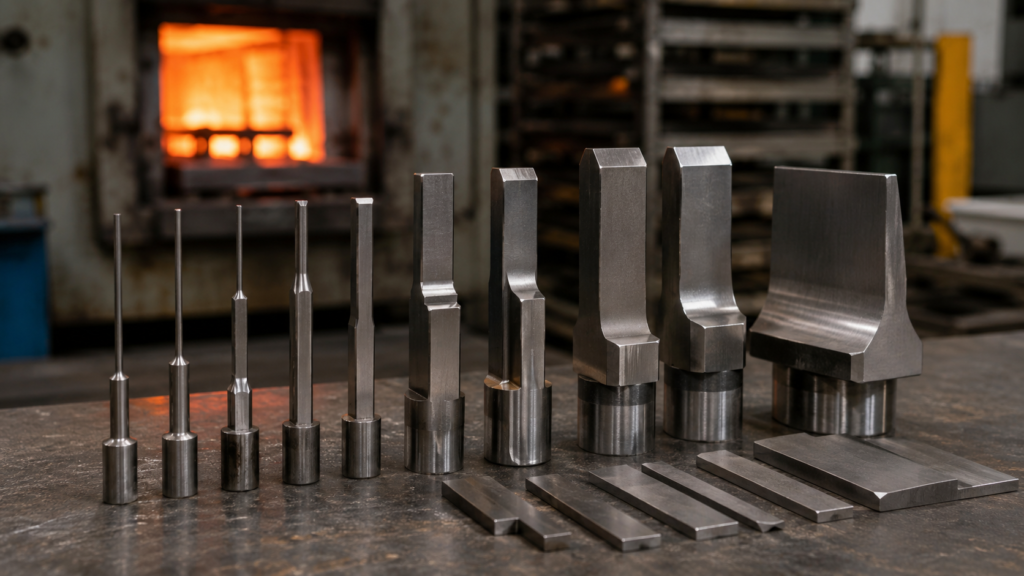
While O1 tool steel is cheaper per kg, heat-treatment-induced scrap and rework may make it more expensive in total lifecycle costs. A2’s slightly higher material cost is often offset by reduced distortion, lower scrap, and fewer rework hours.
Application Scenarios
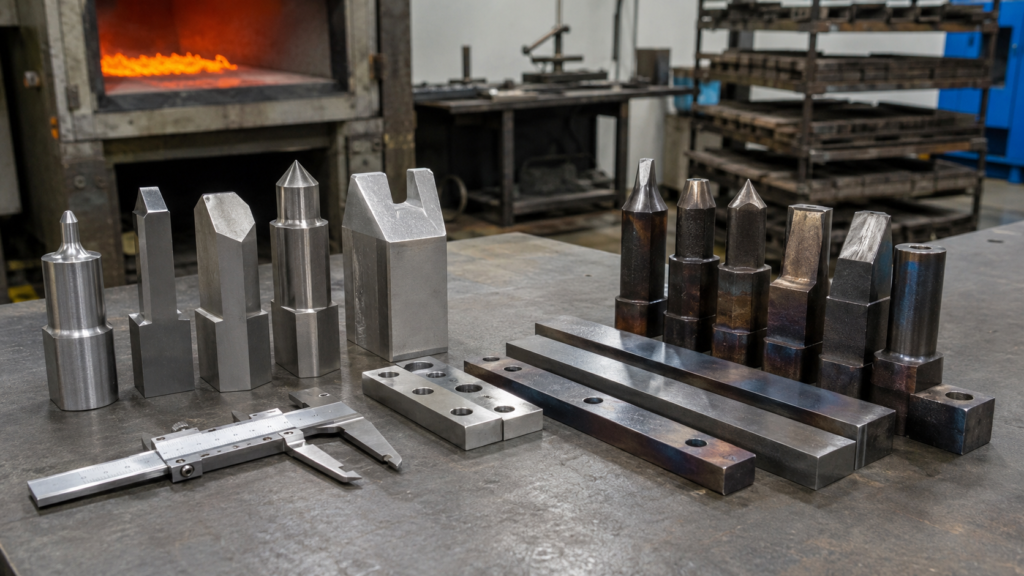
- Small Punches and Dies: High repeatability required → A2 preferred
- Repair Tooling & Low-Volume Jigs: Less critical tolerances → O1 suitable
- Thin Blades: Minimal post-hardening allowance → A2
- Fixtures & Gauges: Tight tolerance critical → A2
Conclusion
Choosing between O1 vs A2 tool steel is not just a material question—it’s a production risk management decision. By understanding oil hardening vs air hardening, dimensional stability, and heat-treatment behavior, manufacturers can reduce scrap, improve repeatability, and lower costs.
FAQ
Is A2 always better than O1?
No, it depends on tolerance, shape complexity, and allowable grinding allowance.
Can O1 be used for precision thin parts?
It’s possible but requires careful quenching and allowances.
What is the key advantage of air hardening steel?
More predictable dimensional stability after heat treatment.