
Table of Contents
Quick summary — who should read this
This guide helps injection-molding engineers, mold polishing supervisors and procurement specialists decide between NAK80 vs 718H when specifying pre-hardened mold steels for transparent parts (PC lenses, optical housings) and high-gloss black components. It focuses on real-world polishing performance, repairability, cycle life and cost — the exact factors driving B2B buying decisions.
Short technical comparison
| Feature | NAK80 Mold Steel | 718H Mold Steel |
|---|---|---|
| Steel Type | Precipitation-hardening plastic mold steel | Pre-hardened chromium-nickel plastic mold steel |
| Typical Hardness | ~37–43 HRC (pre-hardened) | ~33–38 HRC (pre-hardened) |
| Polishing Performance | Excellent mirror polish capability, suitable for optical and transparent parts | Good polishing for general plastic molds, but mirror polishing may show drag marks |
| Mirror Finish Potential | Can achieve ultra-fine mirror finishes for lenses and optical components | Suitable for high-gloss surfaces but less ideal for optical transparency |
| Weldability | Weldable but requires controlled repair process and heat treatment | Easier to weld and repair during mold maintenance |
| Machinability | Good machinability with stable microstructure | Very good machinability and faster processing |
| Typical Applications | Optical lenses, transparent PC/PMMA parts, high-gloss consumer electronics components | Automotive parts, appliance housings, general plastic molds |
| Cost Level | Higher material cost but excellent polishing performance | More economical and widely used for general molds |
Why NAK80 vs 718H matters for optical and high-gloss parts
When the functional requirement is a high-clarity surface (e.g., PC lens) or a defect-free, high-gloss black finish, the metal’s microstructure and response to polishing become decisive. In many factory trials, NAK80 vs 718H comes down to three tradeoffs:
1.Ultimate polishability and surface finish — NAK80 is engineered for mirror finishes after EDM and polish; that delivers superior light transmission and fewer polishing artifacts for optical components.
2.Weldability and on-site repairs — 718H is easier and cheaper to weld and repair; it softens predictably in HAZ, simplifying fixes, while NAK80 requires controlled re-age heat treatments after repair to restore hardness.
3.Cost per mold and lifetime value — 718H often has a lower upfront cost, but for premium optical parts the reduced polishing time and lower reject rate with NAK80 can justify the premium.
For procurement decisions the question becomes: does the product need optical-grade polish or will a high-gloss finish with some polishing drag be acceptable? That question defines the NAK80 vs 718H choice.
Polishing & surface finish: what to expect
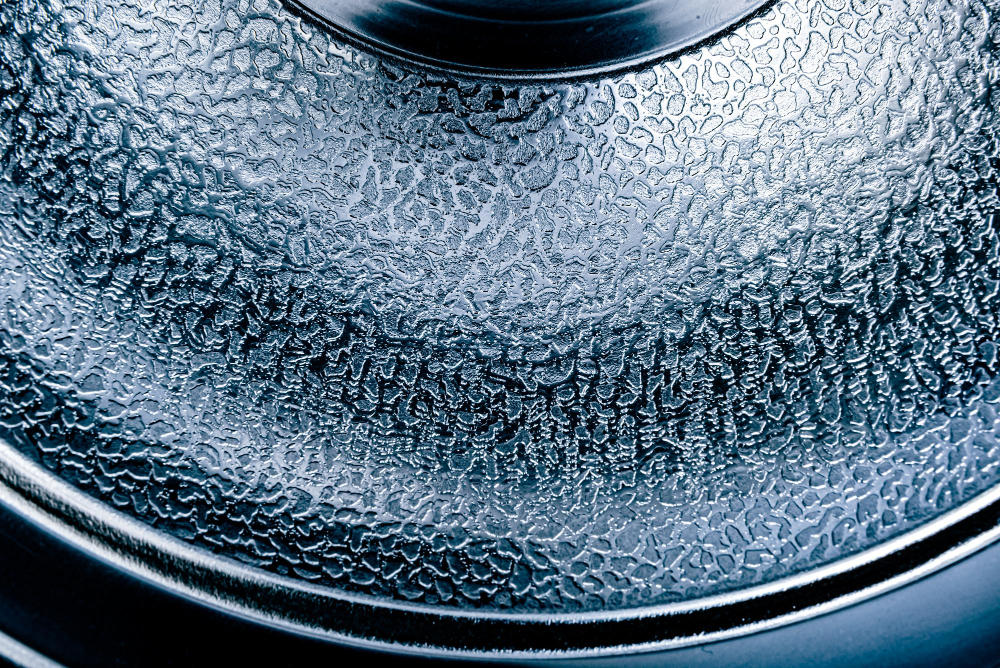
If your polishing spec calls for ultra-smooth surfaces (tight scatter, high light transmission), NAK80 is the specialist: its metallurgy and homogeneous microstructure yield finer, more consistent mirror finishes after EDM and mechanical polishing. Practical evidence from suppliers and moldmakers shows NAK80 delivers superior finishes for camera lenses, LED optics and near-clear PC components.
718H polishes well for decorative and many high-gloss applications, but under aggressive mirror polishing it can show “drag” or faint streaks that an optical part cannot tolerate. For dark, high-gloss finishes (e.g., gloss black housings), 718H can be an economical choice if process controls and finishing steps (polish + coating) are optimized.

Welding, repairs and production practicality
One strength of 718H is easier weldability and on-site repairability — a major advantage for tooling shops and service fleets where quick turnaround prevents downtime. NAK80 is weldable, but repairs must be followed by precise aging or tempering sequences to restore hardness and polishability; this adds cost and process steps. If your operations depend on frequent repairs, consider that in the NAK80 vs 718H calculation.
Machinability and lead time
Both steels machine well, but NAK80 often runs slightly slower in roughing due to its alloy design and hardening behavior; however it machines cleanly to a fine EDM layer that’s easy to remove for final polishing. 718H typically offers faster cutting and lower tool wear, which can shorten lead times. Use this factor when you time critical tooling windows into your procurement decision.
Cost tradeoffs: total cost of ownership (TCO) view
Compare the full TCO: initial plate cost, machining hours, EDM/polishing time, repair expenses and scrap rates. For ultra-critical optical parts, NAK80 vs 718H usually favours NAK80 on TCO because lower polishing time and fewer rejects offset higher material cost. For commodity high-gloss parts where small polishing defects are acceptable or can be masked by coatings, 718H often wins the cost comparison. Industry comparisons place NAK80 above 718H in price and polishability ranking.
FAQ
Which is better for PC lens molds, NAK80 or 718H?
For PC lens molds, choose NAK80 for superior mirror polish and optical clarity.
Is 718H easier to weld than NAK80?
Yes — 718H is generally easier and cheaper to weld and repair on site. NAK80 requires controlled re-age treatments after welding.
Can NAK80 reach extreme mirror finishes?
Yes — NAK80 is engineered for high-grade mirror polishing suitable for lenses and transparent parts; confirm supplier polishing data for your target Ra/Rz.
Which steel gives lower TCO for high-volume non-optical parts?
Often 718H due to lower material and machining costs, but run a TCO analysis including polishing time and reject rates.