
When it comes to choosing high-speed steel (HSS) for your machining and tooling needs, two materials often stand out: M2 vs M3 High Speed Steel. Both are widely used in various industries for manufacturing cutting tools, dies, and other precision components, but they each offer distinct advantages depending on the application. This comparison will explore the unique properties of both M2 and M3 HSS, helping you determine which is the best option for your specific requirements.
Both M2 and M3 High Speed Steel are known for their ability to withstand high temperatures while maintaining their hardness, making them ideal for high-performance cutting applications. However, their performance under stress, heat, and wear can vary, so understanding the differences between them is crucial for making an informed decision.
What is M2 High Speed Steel?
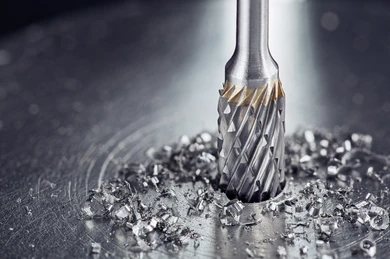
M2 High Speed Steel is one of the most commonly used grades of HSS due to its versatile performance and cost-effectiveness. It is composed of a combination of tungsten, molybdenum, and chromium, which gives it excellent wear resistance and toughness.
Key Characteristics of M2 High Speed Steel:
- Hardness: M2 can be hardened to approximately 62-65 HRC, making it a suitable choice for tools that require high hardness but are not exposed to excessive heat.
- Wear Resistance: M2 performs well in cutting tools, offering a good balance of toughness and wear resistance.
- Toughness: M2 offers a good level of toughness, making it suitable for medium-speed operations and general machining tasks.
Applications: M2 is widely used in the manufacturing of drill bits, taps, reamers, and other cutting tools for metalworking. It’s a versatile material that excels in moderate-speed operations where extreme heat is not a concern.
What is M3 High Speed Steel?
M3 High Speed Steel, often considered an upgrade to M2, contains additional elements such as vanadium, which enhance its red hardness and wear resistance. This makes M3 particularly effective in high-speed and high-temperature applications.
Key Characteristics of M3 High Speed Steel:
- Red Hardness: M3 is better than M2 in maintaining its hardness at elevated temperatures. This makes it ideal for high-speed cutting operations where heat buildup is significant.
- Wear Resistance: M3 offers improved wear resistance over M2, especially at higher temperatures, allowing for longer tool life and more efficient cutting.
- Toughness: While M3 is tougher than many other HSS grades, it is less tough than M2, so it is more suited for tasks requiring high precision rather than heavy-duty applications.
Applications: M3 High Speed Steel is commonly used in tools exposed to high temperatures such as high-speed cutting tools, milling cutters, and aerospace applications.
M2 vs M3 High Speed Steel: Key Differences
Now that we’ve briefly discussed the composition and characteristics of M2 and M3, let’s dive deeper into the differences between M2 vs M3 High Speed Steel in various aspects.
Composition and Alloying Elements
M2 contains higher amounts of tungsten and molybdenum, while M3 includes higher percentages of vanadium. The extra vanadium in M3 improves its wear resistance and its ability to retain hardness at higher temperatures, which is why it performs better in high-speed and high-temperature applications.
Red Hardness
One of the most significant differences between M2 vs M3 High Speed Steel is their ability to retain hardness at elevated temperatures. M3 High Speed Steel excels in this area, making it the better choice for tasks that generate high amounts of heat. M2, while still effective in many applications, tends to soften more quickly at elevated temperatures, limiting its effectiveness in high-speed cutting operations.
Wear Resistance and Durability
M3 generally offers superior wear resistance compared to M2. While M2 is effective in many general-purpose applications, M3 shines in environments where high-speed cutting and heat are prominent, such as in automotive or aerospace industries. The enhanced wear resistance of M3 allows it to withstand extended use without losing its sharpness or efficiency.
When to Choose M2 High Speed Steel
M2 High Speed Steel is a cost-effective option for general machining tasks that don’t involve extreme heat or cutting speeds. If you are working in industries such as general metalworking or in tools that don’t require high red hardness, M2 is a reliable and budget-friendly choice.
Ideal Scenarios for M2:
- Low to Medium-Speed Operations: M2 is well-suited for slower or less demanding tasks.
- General Machining Tools: M2 is commonly used in drills, taps, and reamers where moderate wear resistance and toughness are required.
- Cost-Conscious Applications: M2 provides excellent performance at a more affordable price, making it an attractive option for businesses looking to balance cost with quality.
When to Choose M3 High Speed Steel
M3 High Speed Steel is the material of choice for high-speed and high-temperature operations. If your tooling needs involve cutting at elevated temperatures or if you need tools with superior wear resistance for heavy-duty applications, M3 should be your material of choice.
Ideal Scenarios for M3:
- High-Speed Cutting: M3 excels in applications where tools are exposed to extreme temperatures.
- Aerospace and Automotive Industries: These industries often require tools that can withstand high thermal stresses, making M3 a better choice.
- Longer Tool Life: M3’s enhanced wear resistance ensures that tools last longer under harsh operating conditions.
Cost Comparison: M2 vs M3 High Speed Steel
When it comes to cost, M3 High Speed Steel is typically more expensive than M2 due to its enhanced performance and additional alloying elements like vanadium. However, the cost difference may be justified for high-performance applications where tool life and efficiency are critical.
Cost Consideration:
- M2 is more cost-effective for general-purpose tooling, especially for companies working with moderate-speed operations.
- M3 justifies its higher cost with improved durability and performance, making it a better option for industries where high-speed cutting is crucial.
Which Steel Should You Choose for Your Application?
Choosing between M2 vs M3 High Speed Steel depends largely on the specific requirements of your machining application. Here’s a quick breakdown:
- Choose M2 if you are working in general machining environments where the cutting speed and temperature are relatively moderate. M2 provides great value for most standard tooling needs.
- Choose M3 if your application involves high-speed cutting, precision work, or operations where high temperatures and wear resistance are critical.
Conclusion
Both M2 vs M3 High Speed Steel offer excellent performance, but they serve different purposes based on their unique properties. M2 provides a versatile, cost-effective solution for general-purpose tooling, while M3 excels in high-speed, high-heat applications where superior red hardness and wear resistance are needed. By understanding the key differences between these two materials, you can make an informed decision and select the best high-speed steel for your tooling requirements.
If you want to know more about this, please click here.