
Welcome to My Blog! 🌟
Before we dive into the content, I’d love for you to join me on my social media platforms. It’s where I share more insights, engage with our vibrant community, and post regular updates. Here’s how you can stay connected:
📘 Facebook: Connect with me on Facebook
Now, let’s embark on this journey together. I hope you find the content here insightful, engaging, and most importantly, valuable. Let’s explore, learn, and grow together! 🚀
Table of Contents
Steel is one of the most widely used materials in modern industry, from construction to automotive manufacturing. Among its varieties, hot rolled steel and cold rolled steel are two commonly used forms. Understanding their differences, mechanical properties, and typical applications is essential for engineers, fabricators, and buyers to make informed choices.
This guide explores these differences in detail, provides real-life examples, and helps you choose the right steel for your project.
Introduction to Hot vs Cold Rolled Steel
Hot rolled steel and cold rolled steel start from the same raw material but differ significantly in production methods. These differences affect surface finish, strength, hardness, and cost.
This article will cover:
- Basic definitions and manufacturing processes
- Mechanical and physical properties
- Applications and real-life examples
- Selection tips and FAQ
What is Hot Rolled Steel?
Definition and Key Concept
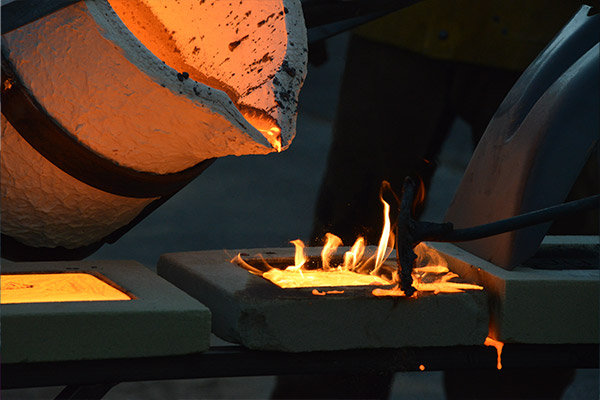
Hot rolled steel is produced by rolling steel at high temperatures, usually above 1700°F (926°C). At this temperature, the steel is soft enough to shape easily. The process results in a coarse surface and slightly less precise dimensions.
Manufacturing Process
The hot rolling process involves:
- Heating steel slabs to high temperatures
- Passing the steel through rolling mills
- Cooling and cutting to size
This method allows the production of large steel sheets and structural components efficiently.
Advantages of Hot Rolled Steel
- Cost-effective: Lower production costs make it ideal for large-scale applications.
- High ductility: Can withstand bending and forming without cracking.
- Suitable for large structures: Perfect for beams, bridges, and industrial machinery.
Limitations
- Surface roughness: May require additional finishing for aesthetic purposes.
- Dimensional accuracy: Less precise than cold rolled steel, which can be a concern for tight-tolerance applications.
What is Cold Rolled Steel?
Definition and Key Concept
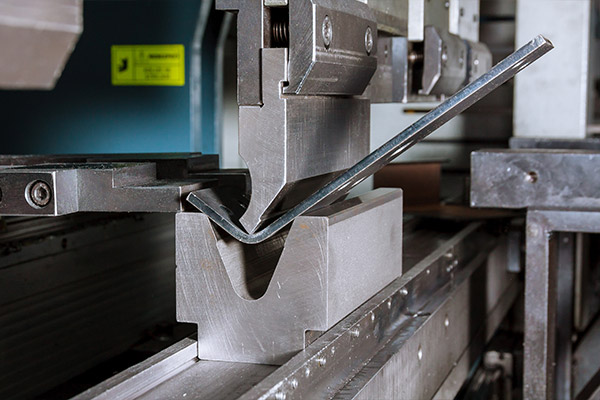
Cold rolled steel is produced by further processing hot rolled steel at room temperature. This additional step improves surface finish, strength, and dimensional accuracy.
Manufacturing Process
Cold rolling includes:
- Cleaning and annealing hot rolled steel
- Passing the steel through rollers at room temperature
- Optional surface treatments to enhance finish
The result is smooth, bright steel sheets with tight tolerances, suitable for precision manufacturing.
Advantages of Cold Rolled Steel
- High strength and hardness: Provides better resistance to deformation.
- Smooth surface finish: Ideal for visible parts, automotive panels, and appliances.
- Dimensional precision: Ensures consistency for precision-engineered components.
Limitations
- Higher cost: More processing steps increase price.
- Thickness limitations: Often limited to thinner sheets compared to hot rolled steel.
Key Differences Between Hot and Cold Rolled Steel
To better illustrate, the following parameterized comparison table highlights key mechanical and physical differences:
| Property | Hot Rolled Steel | Cold Rolled Steel | Ideal Use Cases |
|---|---|---|---|
| Tensile Strength | 400–550 MPa | 500–700 MPa | Structural vs precision parts |
| Hardness | Medium | High | Beams vs car panels |
| Ductility | High | Medium | Bending/forming vs dimensional stability |
| Surface Finish | Rough, dark | Smooth, bright | Industrial structures vs appliances |
| Dimensional Accuracy | ±1–3% | ±0.1–0.5% | Large-scale fabrication vs tight tolerance |
| Cost | Low | High | Budget-sensitive projects vs precision applications |
This table allows users to quickly see how properties align with different applications.
Applications of Hot and Cold Rolled Steel
Hot Rolled Steel in Construction
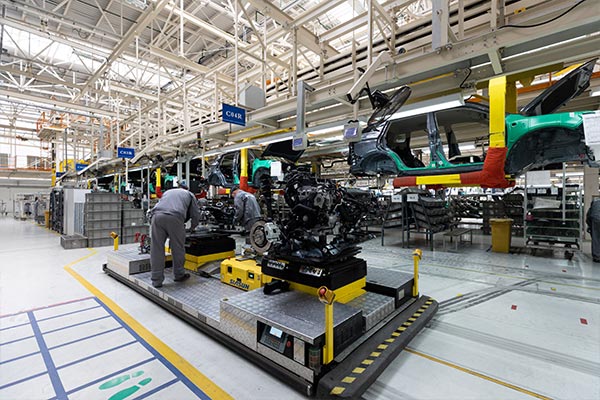
Hot rolled steel is widely used in construction due to its strength and ductility. Beams, bridge supports, and large frameworks benefit from its ability to withstand heavy loads while remaining cost-effective. Projects that prioritize structural integrity over surface finish often prefer hot rolled steel.
Hot Rolled Steel in Machinery
Industrial equipment, pipelines, and large mechanical parts often utilize hot rolled steel. Its ability to endure bending and forming makes it ideal for components subjected to stress and heavy wear. The combination of toughness and affordability is a key reason engineers choose hot rolled steel for large-scale mechanical applications.
Real-Life Example: Golden Gate Bridge
Many of the structural beams in the Golden Gate Bridge in San Francisco are made from hot rolled steel. The material was selected for its ductility and cost-effectiveness, demonstrating the practical benefits of hot rolled steel in large infrastructure projects.
Cold Rolled Steel in Automotive
Cold rolled steel is commonly used in the automotive industry for car panels and frames. Its smooth surface finish and precise dimensions are critical for paint application and high-quality assembly. Cars require materials that can be formed accurately while maintaining strength, making cold rolled steel a preferred choice.
Cold Rolled Steel in Appliances
Refrigerators, washing machines, and other household appliances often incorporate cold rolled steel. The material’s smooth finish and dimensional consistency ensure that components fit perfectly and look aesthetically pleasing, which is especially important for consumer-facing products.
Cold Rolled Steel in Furniture and Decorative Elements
Furniture and decorative metalwork benefit from cold rolled steel because of its precise shape and polished appearance. This makes it ideal for products that are both functional and visually appealing. Designers often choose cold rolled steel when surface quality and uniformity are essential.
Real-Life Example: Automotive Manufacturing
Tesla and other leading automotive manufacturers use cold rolled steel for critical vehicle components. Smooth surface finish, strength, and high dimensional accuracy are essential for ensuring safety, design consistency, and high manufacturing standards.
Choosing the Right Steel
Deciding between hot vs cold rolled steel depends on several factors:
Budget Considerations
Hot rolled steel is more cost-effective for large-scale projects, making it a practical choice for construction and heavy machinery where aesthetics are not the priority.
Precision Requirements
Cold rolled steel provides tighter tolerances and smoother surfaces, which are necessary for automotive panels, appliances, and decorative applications.
Application Type
The intended use of the steel determines the optimal choice: structural components may favor hot rolled steel, while aesthetic or precision applications often require cold rolled steel.
Pros and Cons Summary of Hot vs Cold Rolled Steel
Hot Rolled Steel
Pros:
- Affordable and cost-effective for large projects
- High ductility allows easy forming and bending
- Well-suited for structural applications such as beams and pipelines
Cons:
- Rough surface finish may require additional processing
- Dimensional accuracy is lower, potentially needing machining for precise applications
- Less suitable for visible or decorative components
Cold Rolled Steel
Pros:
- Higher strength and hardness provide durability for precision components
- Smooth, uniform surface ideal for automotive panels, appliances, and furniture
- Excellent dimensional accuracy ensures reliable assembly and fit
Cons:
- Higher cost compared to hot rolled steel due to additional processing
- Limited thickness for some applications
- May not be practical for very large structural elements
Conclusion
Understanding the differences between hot rolled and cold rolled steel is crucial for making the right material choice.
- Hot Rolled Steel: Best for large-scale, budget-sensitive projects such as construction and industrial machinery.
- Cold Rolled Steel: Ideal for applications requiring smooth surfaces, higher strength, and precise dimensions, such as automotive components and appliances.
Real-life Tip: When in doubt about which steel to use for a specific application, it’s always wise to consult material specifications and project requirements before purchasing.
FAQ
What is the main difference between hot rolled and cold rolled steel?
Hot rolled steel is processed at high temperatures with a rough surface, while cold rolled steel is further processed at room temperature for a smoother finish and higher precision.
Can I weld cold rolled steel easily?
Yes, but its higher hardness may require proper welding techniques and equipment.
Is hot rolled steel more durable than cold rolled steel?
Hot rolled steel is tougher and more ductile, ideal for structural components, while cold rolled steel is stronger and harder for precision applications.
Which steel is better for building projects?
Use hot rolled steel for beams, frames, or pipelines due to cost and size flexibility. Cold rolled steel is preferred for panels, decorative elements, or tight-tolerance components.
Can hot rolled steel be converted into cold rolled steel?
Yes, hot rolled steel can be further processed into cold rolled steel by additional rolling and finishing steps.
Need specific material selection advice? Contact our engineers for personalized guidance on choosing the right steel for your project.