
S7 vs A2 Tool Steel: Preventing Tool Failure in High-Impact Applications
In the world of high-volume industrial production, downtime is the ultimate profit killer. Toolroom managers and engineers often find themselves caught in a recurring debate when a critical punch or die fails: do we need more wear resistance, or do we need more toughness? This central conflict is most evident in the classic comparison of S7 vs A2. While both are staples in the tool steel world, misapplying one in a scenario meant for the other leads to either premature wear or catastrophic fracture.
Choosing the right material isn’t about finding the “superior” steel; it is about matching the physical properties of the alloy to the specific mechanical stresses of your operation. Whether you are running a cold heading line or a heavy-duty stamping press, the S7 vs A2 choice will dictate your maintenance intervals and overall tool life.
The Metallurgy of Impact: Why S7 Steel Rules the Heavy-Duty Floor
When your application involves “absolute-zero-failure” requirements under heavy shock, you are looking for a shock resisting steel. S7 is a chrome-molybdenum alloy designed specifically for this purpose. Unlike higher-carbon steels that prioritize hardness at the expense of ductility, S7 maintains a unique balance.
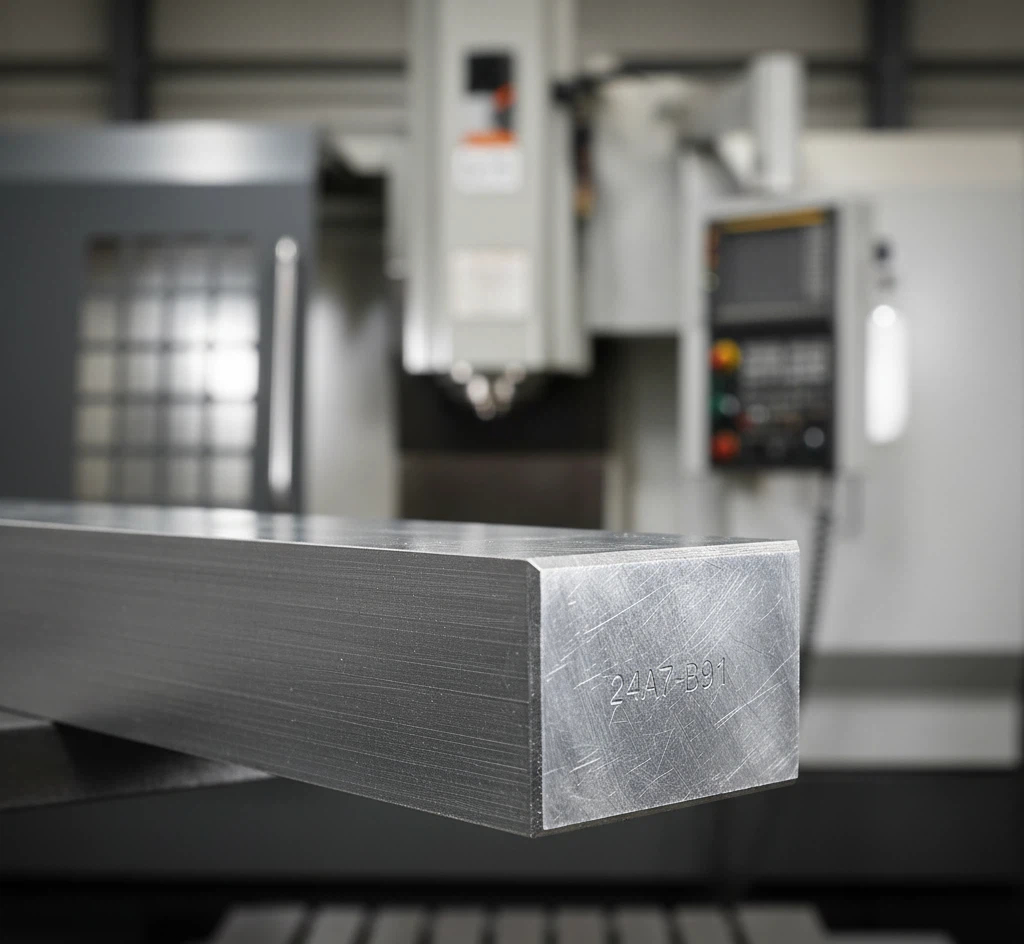
From a metallurgical standpoint, S7 contains roughly 0.50% carbon. This lower carbon content compared to A2 (which sits around 1.00%) allows for a much tougher martensitic structure. In applications like pneumatic chisels or heavy-duty cold heading punches, the S7 impact toughness allows the tool to absorb energy through microscopic elastic deformation rather than brittle fracture.
According to the ASTM A681 Standard Specification for Tool Steels, S7 is categorized as a shock-resisting grade precisely because it can withstand repeated high-velocity strikes without “mushrooming” or cracking.
The Versatility Advantage: When A2 Steel Takes Priority
While S7 is the king of impact, A2 is the undisputed workhorse of the general cold-work industry. As an air-hardening tool steel, A2 offers a level of dimensional stability that S7 struggles to match during heat treatment. For precision dies where “movement” in the furnace must be kept to a minimum, A2 is the safer bet.
The trade-off in the S7 vs A2 debate here is wear resistance. A2’s higher carbon and chromium content (5%) results in a higher volume of chromium carbides. These carbides act as microscopic “sandpaper-resistant” particles within the steel matrix. If your job involves punching thin-gauge stainless steel at high speeds, the abrasive wear will dull an S7 tool much faster than an A2 tool.
However, A2 has a “glass-like” quality at higher hardness levels. If an A2 punch encounters a misfeed or an oversized slug, it is prone to chipping or snapping. This is where the choice becomes critical: do you prefer a tool that wears out slowly (A2) or a tool that refuses to break (S7)?
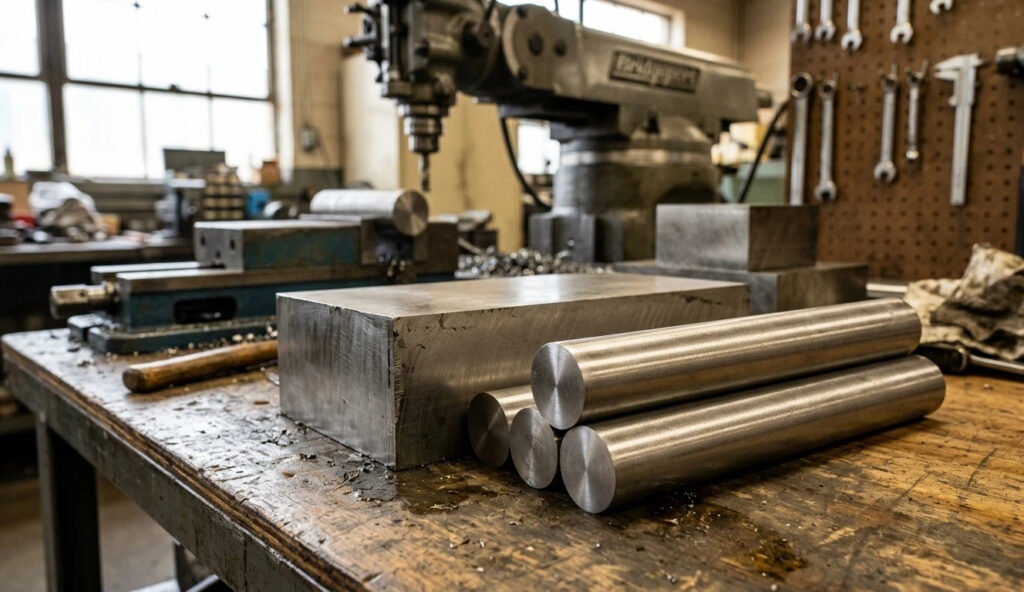
S7 vs A2 Steel in Charpy Impact Tests
To move beyond anecdotal evidence on the shop floor, we must look at the data. Impact toughness is typically measured using the Charpy V-Notch test, governed by ASTM E23. This test measures the energy absorbed by a material during fracture.
In a direct comparison of S7 vs A2, the numbers are stark. At a working hardness of 57 HRC, S7 typically exhibits an impact energy of approximately 100-125 ft-lbs. In contrast, A2 at the same hardness often falls below 40 ft-lbs. This roughly 3x difference in S7 impact toughness explains why S7 is the go-to for concrete breakers and heavy-duty cold heading, where the forces involved would shatter A2 instantly.
However, the S7 vs A2 comparison changes when we look at compressive strength. A2 can be pushed to higher Rockwell C levels (up to 60-62 HRC) while maintaining enough integrity for light-impact work. S7, if pushed to 60 HRC, becomes increasingly brittle, losing the very “shock-resisting” qualities that make it valuable.
Heat Treatment Logistics: Air-Quench vs. Oil-Quench
One of the most overlooked factors in the S7 vs A2 selection process is the heat treatment capability of your supplier. A2 is a true air-hardening steel. This means it can be cooled in still air, which results in extremely low distortion. This makes it the “gold standard” for complex, intricate die designs where tolerances are measured in microns.
S7 is also considered an air-hardening steel in smaller cross-sections. However, for larger tools (over 2.5 inches in diameter), it often requires an oil quench to achieve full hardness throughout the core. This introduces a higher risk of quench cracking and distortion. If your tool design is massive and requires uniform through-hardness, the logistics of the S7 vs A2 heat treat cycle must be a primary consideration.
Furthermore, S7 is highly versatile in its tempering range. By adjusting the tempering temperature, you can dial in a specific hardness-to-toughness ratio. For example, a lower temper (400°F) yields high hardness for cutting, while a higher temper (1000°F) optimizes the material for heavy shock.
Real-World Failure Analysis: Chipping vs. Plastic Deformation
Understanding the failure modes in the S7 vs A2 dynamic is essential for troubleshooting. When an A2 tool fails, it usually “chips” at the cutting edge or snaps entirely. This is a sign that the mechanical shock has exceeded the material’s fracture toughness.
When an S7 tool fails, it rarely snaps. Instead, it “deforms” or “mushrooms.” You might notice the edges of your punch becoming rounded or the material literally spreading out under pressure. This tells the engineer that the material is tough enough to survive, but perhaps not hard enough to maintain its geometry over a long production run.
This is why the S7 vs A2 decision often comes down to the thickness of the material being processed.
- Rule of Thumb: If the material thickness is greater than the punch diameter, or if you are working with heavy-gauge plate, S7 is a mechanical necessity.
- Rule of Thumb: If you are working with thin, abrasive materials and require high-speed precision, A2 will provide the better ROI.
Cost-Benefit Analysis: Machinability and Availability
From a procurement perspective, the S7 vs A2 comparison includes a financial dimension. A2 is one of the most widely available tool steels globally. Because of its massive production volume, it is generally more cost-effective per pound than S7. It is also slightly easier to machine in its annealed state, which reduces lead times in the machine shop.
S7, being a specialized shock resisting steel, can be more expensive and sometimes harder to source in specific oversized blocks or rounds. However, if using S7 prevents a catastrophic die crash that stops a production line for two days, the initial material cost becomes irrelevant. You aren’t just buying steel; you are buying insurance against breakage.
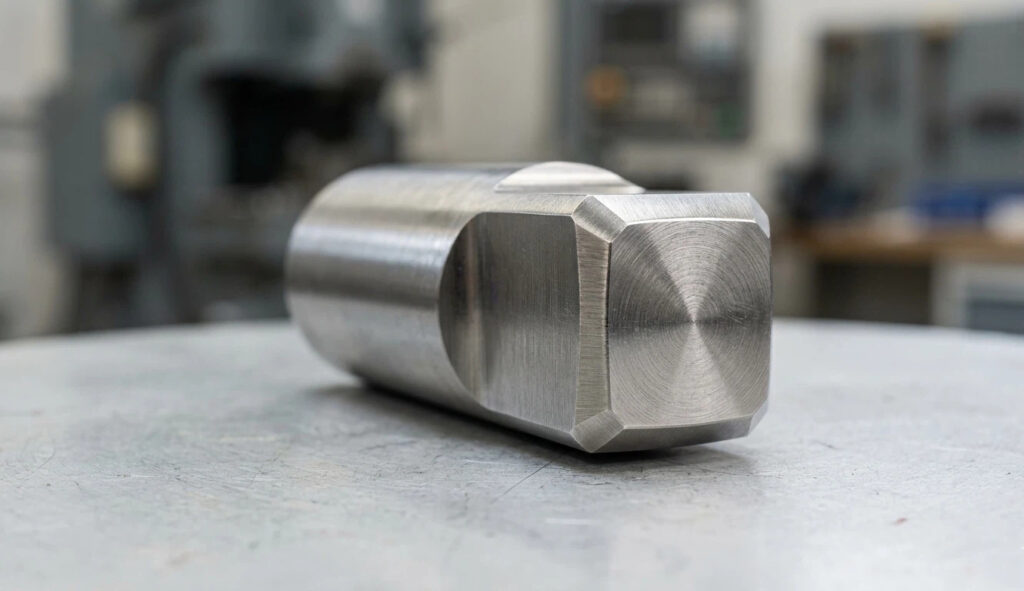
Matching Steel Grades to Your Tooling Requirements
The debate of S7 vs A2 will never have a universal winner because the “best” steel is entirely situational.
If your priority is high-speed production, excellent wear resistance, and dimensional stability in the furnace—and your impact levels are moderate—A2 tool steel remains the industry standard. It offers the best balance for 80% of general cold-work applications.
However, if you are struggling with recurring tool breakage, or if your application involves the violent forces of cold heading and heavy-duty punching, you need the superior S7 impact toughness. S7 provides a safety margin that no other cold-work steel can match, ensuring that your tools stay in the press and out of the scrap bin.
Ultimately, the most successful operations are those that keep both grades in their repertoire. By understanding the mechanical limits of S7 vs A2, you can optimize your tooling for the specific stress of the job, significantly reducing downtime and maximizing your bottom line.
FAQ
Which is better for cold heading, S7 or A2?
For cold heading, S7 is almost always the better choice. The extreme impact and axial loads involved in heading require the high fracture toughness of a shock resisting steel to prevent the punch from shattering.
Can I use S7 for a cutting die?
Yes, but you will need to monitor the edge wear. While S7 is tough, its wear resistance is lower than A2. You may need to sharpen the die more frequently, but you will significantly reduce the risk of the die cracking.
What is the maximum hardness for A2 tool steel?
A2 can reach up to 60-62 HRC. However, for most applications, it is tempered back to 58-60 HRC to provide a slightly better balance of toughness.
How does S7 impact toughness compare to other steels?
S7 is among the highest in its class. Only specific S-series grades or certain premium “super-tough” powder metallurgy steels can compete with the shock resistance of S7.