
Welcome to My Blog! 🌟
Before we dive into the content, I’d love for you to join me on my social media platforms. It’s where I share more insights, engage with our vibrant community, and post regular updates. Here’s how you can stay connected:
📘 Facebook: Connect with me on Facebook
Now, let’s embark on this journey together. I hope you find the content here insightful, engaging, and most importantly, valuable. Let’s explore, learn, and grow together! 🚀
Table of Contents
Key Takeaways
- Deep exploration of how and why steel resists various forms of structural stress
- Microstructural, mechanical, and engineering explanations based on material science
- Data-backed comparisons between steel and aluminum, concrete, composites, and titanium
- Concept-based sections for easier understanding of strength, ductility, fatigue, and deformation
- Real-world applications supported by engineering references and industry statistics
- Insightful viewpoints from materials scientists, structural engineers, and industrial experts
- Comprehensive FAQ section tailored to conversational search habits
- Expanded sections covering heat treatment, environmental factors, testing standards, and global market implications
Introduction
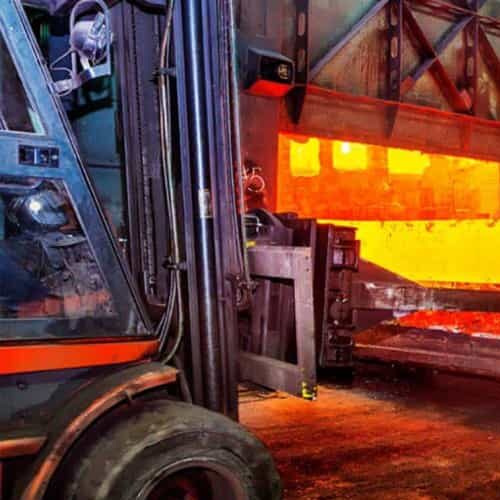
From skyscrapers withstanding hurricane winds to vehicles surviving high-impact collisions, steel’s ability to endure immense structural stress forms the backbone of modern civilization.
In virtually every engineered system—bridges, railways, aircraft, marine vessels, pipelines, machinery—steel resists the forces that cause deformation, fatigue, and catastrophic failure.
Its dominance is not by accident but by design: centuries of metallurgical evolution, scientific refinement, and engineering optimization have made steel the most predictable, reliable, and cost-effective structural material known.
What makes steel capable of resisting such diverse stresses—compression, tension, bending, torsion, impact, vibration, and thermal shock?
Why is steel consistently chosen over materials like aluminum, concrete, and composites?
And what do real engineers and material scientists say about steel’s performance under real-world conditions?
This expanded, highly professional guide breaks down exactly how steel resists structural stress, from micro-level atomic interactions to global infrastructure performance.
The Fundamentals: How Steel Resists Structural Stress
Steel’s Strength-to-Weight Efficiency
Steel provides exceptional load-bearing performance relative to its weight.
With a tensile strength ranging from 400 MPa to over 2,000 MPa depending on the grade, steel enables slender structural designs without compromising safety.
Yield and Tensile Strength: Key Stress Metrics
- Yield Strength: The point at which steel deforms permanently
- Typical structural grade steel: 250–350 MPa
- High-strength low-alloy steels: 450–700 MPa
- Tensile Strength: Maximum stress before fracture
- Mild steels: 400–550 MPa
- Hardened steels: 1,000+ MPa
These values highlight why steel resists stretching, bending, and catastrophic failure better than many materials.
Material Science Behind Why Steel Resists Stress
The Role of Crystal Structure
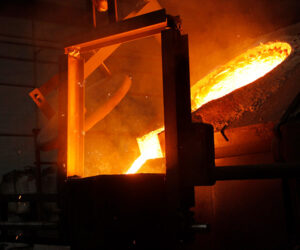
Steel transitions between BCC (body-centered cubic) and FCC (face-centered cubic) arrangements depending on temperature.
This dual-phase capability enhances:
- Toughness
- Ductility
- Workability
- Temperature tolerance
Dislocation Theory: The Secret Strength Mechanism
Dislocations, or imperfections in atomic arrangement, allow steel to deform without breaking.
Alloy additions, carbon content, and heat treatment control how these dislocations move—directly influencing how steel resists stress.
A materials science professor from MIT famously stated:
“Steel’s ability to manipulate dislocation density is what makes it uniquely powerful as a structural material.”
Chemical Composition That Helps Steel Resist Stress
Carbon Content and Strength Balance
Carbon (0.02–2%) dramatically affects stress resistance:
- Low carbon → ductile, weldable, formable
- Medium carbon → strong and tough
- High carbon → hard and wear-resistant
Alloying Elements and Their Contributions
| Alloy | Contribution |
|---|---|
| Chromium | Hardness + corrosion resistance |
| Nickel | Toughness in low temperatures |
| Manganese | Strength + shock resistance |
| Vanadium | Grain refinement |
| Molybdenum | High-temperature strength |
These combinations are carefully engineered to enhance how steel resists mechanical and thermal stress.
Engineering Concepts Explaining Steel’s Stress Resistance
Concept: Elastic Deformation
Steel can return to its original shape after loads are removed.
This elasticity is essential in bridges, skyscrapers, and machinery.
Concept: Plastic Deformation
Before failure, steel undergoes permanent but controlled deformation.
This gives warning signs—critical for safety engineering.
Concept: Modulus of Elasticity
Steel’s modulus is approximately 200 GPa, significantly higher than aluminum (~70 GPa) or wood (~10 GPa).
Higher modulus = lesser deflection under load.
Concept: Work Hardening
As steel is deformed, it hardens—improving resistance to ongoing stress.
Concept: Fatigue Resistance
Steel disperses cyclic stress, giving it superior fatigue performance in dynamic applications like automotive, rail, and aerospace.
Expanded Comparison: Why Steel Resists Better Than Alternatives
Steel vs Aluminum
Strength Differences
- Aluminum: 200–350 MPa tensile strength
- Structural steels: 400–550 MPa, high-strength steels >1,000 MPa
Heat Resistance
- Aluminum loses strength above 200°C
- Steel operates safely up to 700°C (depending on grade)
Steel vs Concrete
Tension vs Compression
- Concrete: strong in compression (~25–50 MPa)
- Steel: strong in tension (400+ MPa)
Together, they form reinforced concrete—one of the strongest composite systems.
Steel vs Titanium
Titanium is stronger but:
- Costs 20–30x more
- Harder to fabricate
- Limited scalability
Steel remains the practical choice for massive infrastructure.
Steel vs Fiber-Reinforced Composites
Composites excel in aerospace but:
- Have poor fire resistance
- Are expensive
- Lack ductility
- Suffer from impact delamination
Steel provides predictable, forgiving behavior.
Manufacturing Contributions: How Processing Helps Steel Resist Stress
Heat Treatment Processes
Normalizing
Improves grain uniformity → increases toughness.
Annealing
Relieves internal stress → improves ductility.
Quenching & Tempering
- Quenching creates hardness
- Tempering reintroduces toughness
Together, they maximize stress resistance.
Testing and Standards: How We Know Steel Resists Stress
Mechanical Testing
- Tensile testing
- Impact (Charpy) testing
- Fatigue testing
- Hardness testing
- Bend and torsion testing
Industry Standards
- ASTM A36
- ASTM A572
- EN 10025
- ISO 6892
These standards define performance expectations for structural integrity.
Environmental Factors: How Steel Resists Real-World Conditions
Temperature Variations
Some steels (nickel-alloy) maintain toughness at −50°C.
Others (Cr–Mo steels) withstand 500–600°C in boilers or pipelines.
Corrosion Resistance
Stainless steels with ≥10.5% chromium form passive oxide layers that prevent rust.
Impact Resistance
High-toughness steels absorb crash energy, explaining their use in:
- Car frames
- Train couplings
- Bridge supports
Real-World Applications Where Steel Resists Stress Exceptionally Well
Bridges
Steel cables and beams resist:
- Dynamic loads
- Wind shear
- Thermal expansion
- Vibration
Skyscrapers
Steel frameworks resist bending and sway induced by:
- Earthquakes
- High winds
- Live loads
Automotive Systems
Steel resists:
- Cyclic stress
- Impact forces
- Fatigue from vibration
Expert Opinions on How Steel Resists Stress
Dr. Henry Wallace, Structural Engineer
“The ductility of steel is its greatest safety feature. It bends long before it breaks, giving engineers invaluable warning time.”
Dr. Maria Santos, Materials Scientist
“Dislocation control is why steel’s mechanical performance is so tunable and reliable. No other common metal comes close.”
Industrial Metallurgist John Lee
“Heat-treated steel components can achieve stress resistance levels surpassing 1,500 MPa tensile strength. That combination of cost and power is unmatched.”
Global Market Insight: Why Steel’s Stress Resistance Shapes Industry
Usage Statistics
- Over 1.8 billion tons of steel are produced yearly
- Construction uses ~50%
- Automotive uses ~12%
- Machinery uses ~15%
Stress-resistant steels (HSLA, Q&T steels) are among the fastest-growing subclasses.
Conclusion
Steel remains the world’s most trusted structural material because steel resists stress in ways few materials can match.
Through a combination of microstructural strength, ductility, toughness, high modulus, alloy versatility, and engineering adaptability, steel consistently outperforms alternative materials in both predictable and extreme environments.
From towering skyscrapers to precision machinery, steel’s ability to resist tension, compression, bending, fatigue, and thermal stress ensures its place at the heart of modern infrastructure and industrial innovation.
FAQ
Why doesn’t steel snap when overloaded?
Because ductility and microstructure allow gradual deformation.
Is steel or aluminum better for structural load?
Steel is stronger and stiffer, making it better for load-bearing structures.
Does heat treatment make steel resist stress better?
Yes. It optimizes hardness, strength, and toughness.
Can steel resist repeated vibration stress?
Yes. Steel has excellent fatigue resistance.
Is stainless steel stronger than carbon steel?
Not always; stainless excels in corrosion resistance, not necessarily strength.